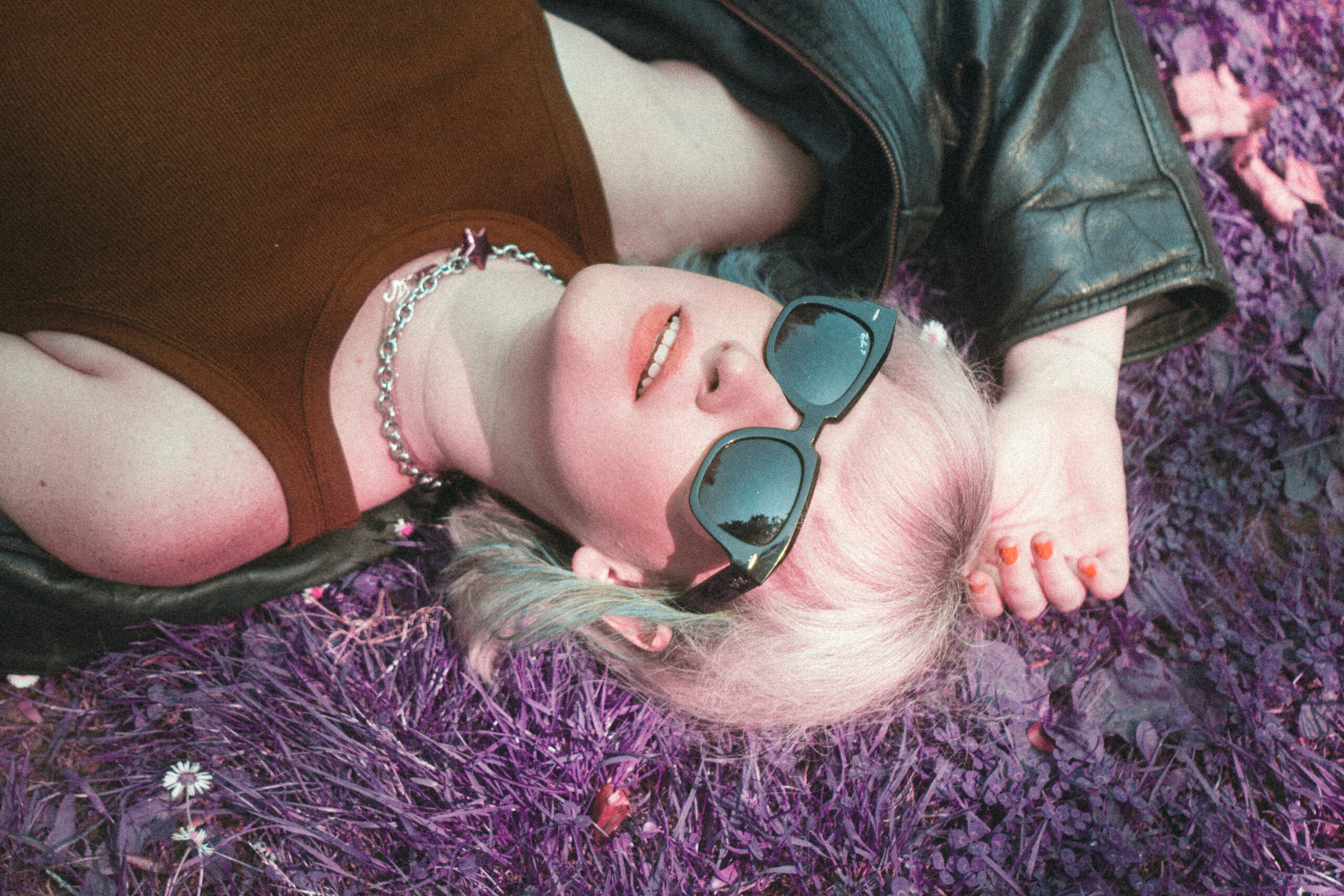
For Best Ex, songwriting has always been about making people feel a little less alone. From her early days fronting Candy Hearts to the more introspective music she’s created since, Mariel Loveland has spent much of her life turning heartbreak, uncertainty and the everyday absurdities of being human into songs that find humour and connection in even the messiest moments.
Her new album, Good Girl, sees her returning to guitar-driven sounds while reflecting on girlhood, growing older and the expectations women are taught to carry. Looking back on her twenties with a little more perspective, Loveland explores what it means to stop seeking approval, unlearn the pressure to accommodate everyone else and build a life that doesn’t necessarily follow society’s prescribed milestones. It’s a record about reclaiming your own voice, with plenty of biting humour along the way.
We caught up with Mariel to talk about growing alongside her music, challenging the idea of the ‘good girl’, finding freedom in ageing loudly, rediscovering her love of guitars and why making people feel seen and understood has become more important than ever. Read the Q&A below.
For anyone discovering Best Ex for the first time through this interview, how would you describe yourself as an artist and what keeps you coming back to making music?
“At my core, I am a storyteller. My purpose is to give voice to the feelings and moments in life that we may have trouble articulating—so that someone, somewhere, can listen and think, that’s exactly how I feel. I’m not alone.
“What keeps me coming back, again and again, is having something I think is worth saying. That doesn’t mean it’s always a deep or important message, but I like to think my songs serve a purpose. Maybe I’ll run out of words one day, but as long as I have a perspective I haven’t yet heard spoken in quite the same way, I’ll keep singing.”
You’ve been writing and performing since your Candy Hearts days, and Good Girl finds you looking back on girlhood and your twenties with the perspective you have now. How has what you need from songwriting changed as you’ve grown alongside your music?
“When you’re a young songwriter, I think it’s easy to get swept up writing about heartbreak. Relationships are chaotic in your 20s and at the same time, you’re discovering who you are. Writing songs felt a lot more urgent. I had to explain my feelings, even if it was just to my bedroom wall, because I felt so misunderstood and so alone. I wasn’t intentional about it at all. I just wrote constantly, and followed every single idea until the end.
“Now, I find myself looking back on that wild, uncertain time (which, honestly, most people go through) with a calmer, more grounded perspective. We’re also living in a different moment, where the internet is completely oversaturated with content. I don’t want to add to the noise. I want to make something because it actually serves a purpose, so I’ve gotten a lot more intentional with my writing. I ask myself: does this need to be said? Has someone already said this, in this same way? And because of that, I find myself writing more about the world, my community, and how my life fits into it all—rather than just writing about some guy who didn’t like me that much. There’s still some of that too, though. I throw out way more ideas than I finish!”
Good Girl picks apart the idea of the “good girl” – someone who smiles, doesn’t ask for too much and fits herself into the expectations placed upon her. What have you personally had to unlearn about being a “good girl”, both as a woman and as an artist?
“I think the hardest thing for me to unlearn was that I’m not responsible for how other people handle themselves. The patriarchy teaches women to shrink themselves, to manage everyone else’s emotions at the expense of their own wants and needs. It teaches us we are responsible for the way men behave, but the men can’t help it because boys will be boys. Really, how people behave is their issue — and letting go of that responsibility has allowed me to make space for myself and build a career on my terms.
“As an artist in a male-dominated industry, I used to spend a lot of energy managing or excusing bad behavior from men. I’m not talking about the normal friction of touring—everyone gets cranky, everyone has an off day, myself included. That’s just being human. I’m talking about the bigger stuff: excusing harassment, laughing along at jokes that made women the punchline, having to reframe my own ideas as theirs just to get taken seriously, being extra accommodating so I wouldn’t get labeled difficult, even if they were allowed to scream at me and never got called the same thing.
“I’m lucky I didn’t have to do any of that with the people in my band, who are like my family and see me as myself. But outside of it? It’s exhausting. Now, I just let other people think whatever they want about me — their opinion isn’t my responsibility to manage. And I’m allowed to take up space, ask for what I want, and say no to the things I don’t want.”
You’ve spoken about hearing strong women on ’90s rock radio as a child and only fully understanding what they were singing about years later. Is there something particularly special about realising that you can now make the kind of record that might become that same companion for another girl growing up?
“I think in our society, that puts this intense value on feminine youth, it feels very freeing and sort of punk rock to be a woman aging publicly and loudly. If I didn’t hear those women on the radio growing up and watch them as they navigate their careers today, I think I’d feel absolutely expired. The truth is that as you age, you only get better at understanding yourself. If life doesn’t stop at 30, why should songs? People need songs about their life at any stage.
“There’s something really special in knowing I might get to be that for someone else now — that a girl out there might hear this record the way I heard those women, and not fully understand it yet, but hold onto it anyway, until one day it clicks. I want my art to be something people can find different meanings in throughout their lives. My favorite songwriters nail that.”
This album marks a return to guitars after exploring more synth-driven sounds with Best Ex. Did returning to that side of yourself feel nostalgic, or did you find you approached guitar music completely differently this time around?
“It really just felt nostalgic to me. I write all of my songs on guitar, regardless of how they sound in the recording. It was really fun for me to go back to basics, though. It’s like getting back on a bike. You don’t forget!”
Your songwriting is known for pairing really personal, diary-like introspection with biting humour and sarcasm. Does humour give you a way into writing about things that might otherwise feel too vulnerable to put into a song?
“I think I’m just someone who doesn’t take stuff too seriously. So many moments are like, of course that would happen to me. Life is long, and if you can’t laugh, it’s going to feel even longer. I think humor makes things more relatable — even in dark moments, there’s usually irony you can find. Obviously, if something’s genuinely serious, I’m not going to joke about it. But most of what I write about isn’t that. It’s more about the everyday chaos of being a person.
‘”Sick of Myself,’ for example, is one of the most vulnerable songs I’ve written. But it is kind of comical, especially with, “I will list the reasons you’re acting insane, but I reserve the right to do exactly the same.” Sometimes we all deserve to be called out. It’s easy to see it in someone else, and it’s easy to write a song about someone else’s bad behavior. It’s harder to admit those things about yourself.”
You’ve spent a huge part of your life playing live, from the Warped Tour era onwards. After evolving so much as both a person and an artist, what does performing give you now – and what do you hope people feel when they’re in the room with Best Ex?
“I think performing used to be about, look at me, here are my songs, please like my songs, please like my band. It was about putting on this persona of a rock star. There was a lot of pressure when something scales to the size of Warped Tour or some of the rooms I used to play with Candy Hearts. In the back of my mind was just constantly, “please do a good job, please don’t mess this up. Please don’t let anyone find out I don’t know what I’m doing.”
“Now, my primary focus is connection. I always have this desire to feel heard and understood, but I want to write songs and play them in a way that makes the audience feel that way too. I’ve been doing a lot of rawer performances, which are more vulnerable than a big rehearsed show. Big shows are still super fun and I love them, but there’s also something so special about coming out from behind the wall of guitars and backing tracks and just being me with my stories.”
Finally, you’ve said you want Good Girl to remind people that they can build a beautiful life on their own terms. What does building a life on your own terms mean to you now?
“Honestly, I think we get a lot of messages about what adulthood should look like—the safe and steady job, the house, the husband, the kids. And women, in particular, are in a race against the clock. The music industry acts like you age in dog years, and you’ve expired before you even really understand who you are as a person.
“Building a life on your own terms means forgetting about the milestones. It’s about asking yourself what you actually want, instead of what you’re supposed to want. So what if you don’t want the stable job? I envy people who feel fulfilled waking up to go into an office every day — it would be a lot easier. But you’re allowed to take the harder road. The one that isn’t the safe bet.”