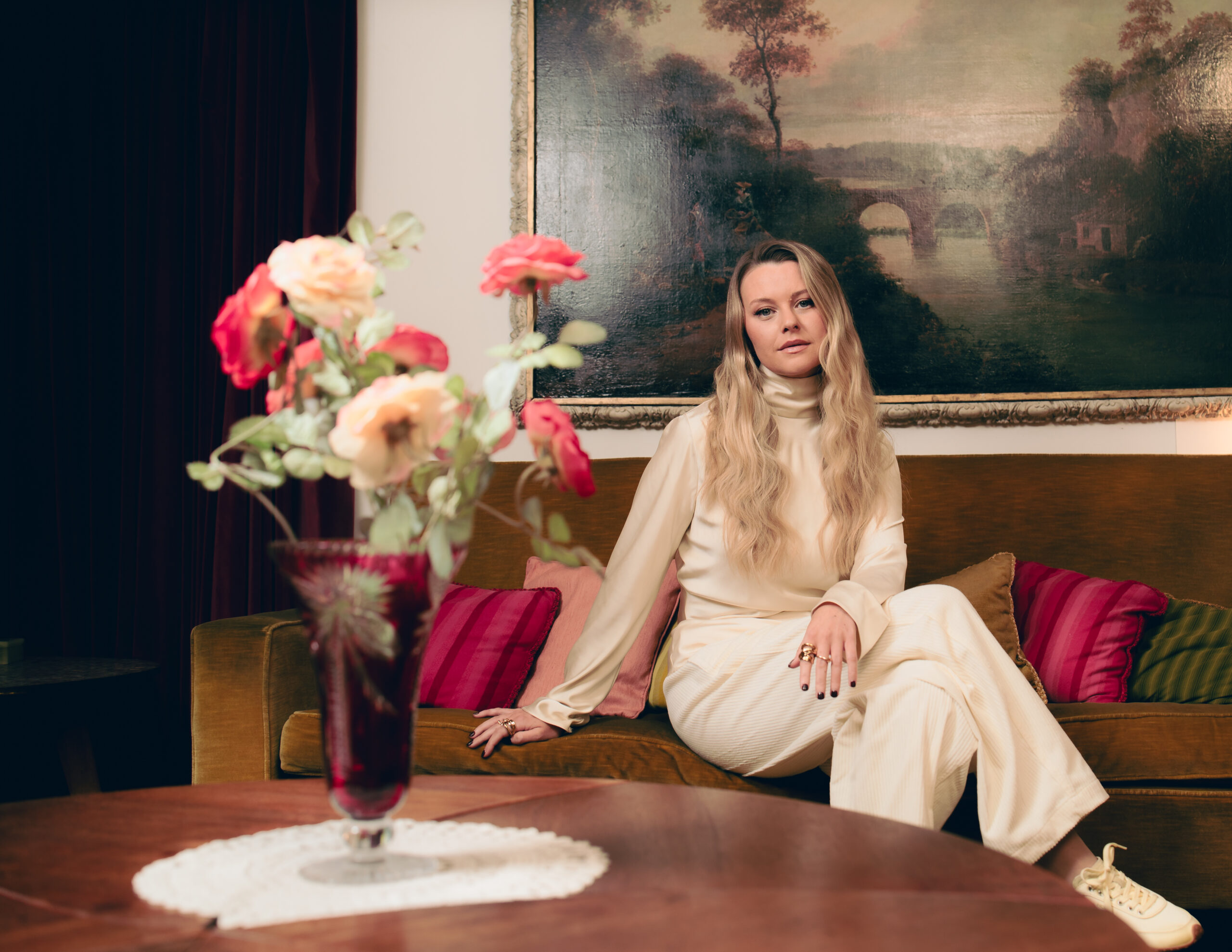
For Lusaint, music has always been somewhere to say the things that don’t necessarily come easily in conversation. Growing up in Stretford on her parents’ jazz and blues records before singing Ella Fitzgerald and Nina Simone covers in local bars, she never imagined that something she simply loved doing could eventually become her life.
Her two-part EP project The Apothecary emerged from a period of emotional healing, gathering songs about heartbreak, insecurity, self-sabotage and the things we continue to carry from our past. Rather than documenting a journey she had already figured out, songwriting became part of the process itself – a way of recognising feelings she hadn’t always been able to put into words.
Now taking those songs far beyond Manchester, including her first headline shows across Europe, Lusaint has discovered that their meaning continues to change once they’re shared with other people. We caught up with her to talk about finding a path into music, understanding home from a distance, the jazz and blues foundations that still shape her work, songwriting as self-discovery and why performing live is where everything finally makes sense. Read the Q&A below.
For anyone discovering Lusaint for the first time through this interview, how would you describe yourself as an artist – and what is it about making music that feels important to you?
“I think at the heart of it I’m a singer-songwriter who’s always been really drawn to soul, jazz and blues. I grew up listening to those kinds of records and I think they’ve naturally found their way into the music I make now, even as it’s developed into something more contemporary.
“The most important thing to me is that there’s honesty in it. I’m not particularly interested in making something just because I think it’s what I should be making. Music has always been the place where I can say things that I probably wouldn’t necessarily say in conversation. There’s something really special about taking something that feels incredibly personal and then watching it become somebody else’s song because they’ve attached their own experience to it. I think that connection is probably the part of being an artist that means the most to me.”
You’ve said that growing up in Stretford, you never imagined a career in music was possible. When did that change for you – was there a particular moment when you first allowed yourself to think, “Maybe I really can do this”?
“It happened quite gradually. Growing up in Stretford, being a singer was something I loved, but I don’t think I understood that it could actually be my life. I was working in a clothing shop, studying fashion and singing covers in bars and restaurants at weekends. Music felt like this thing I did because I loved it rather than something I genuinely thought could become a career.
“When some of the covers I’d recorded started reaching people online, suddenly doors began opening that I’d never really imagined would open for me. I think that was the first time I started thinking, maybe I could do this.”
The Apothecary came from a place of emotional healing, but you’ve said you now feel very different to the person who began making it. What has creating these two EPs taught you about yourself?
“Probably that you don’t always realise you’re changing while you’re in the middle of it.
“When I started The Apothecary, I was carrying things that I hadn’t completely understood or dealt with, and a lot of those emotions ended up in the songs. The whole idea of The Apothecary became almost like collecting different remedies for different parts of yourself — heartbreak, insecurity, self-sabotage, things from the past that you’re still holding onto.”
‘Tib Street’ is a love letter to Manchester and the people, streets and memories that have stayed with you. As your career has taken you further away from home, have you come to understand Manchester’s influence on you differently?
“Definitely. I actually think leaving Manchester made me understand how much of me comes from there.
“When you grow up somewhere, you don’t really analyse it because it’s just normal to you. Stretford was home, Manchester was where I went out, worked, studied, sang in bars — all these little parts of my life happened there without me ever thinking they would eventually become memories I’d write songs about.
“The further I’ve travelled with music, the more I’ve realised how strong that sense of home is. There’s a familiarity and an ease to Manchester that I think will always be part of me, no matter where I live or where the music takes me.”
You grew up listening to your parents’ jazz and blues records before singing Ella Fitzgerald and Nina Simone covers in local bars. Do you feel like there are parts of that younger version of yourself that still come through whenever you make music now?
“Absolutely. Probably more than I consciously realise.
“Ella Fitzgerald and Nina Simone were some of the first voices that made me understand how much emotion could exist in the way somebody sings something. It wasn’t about showing what your voice could do all the time — it was phrasing, restraint, tone and making somebody believe what you were saying.
“I think singing those songs in bars when I was younger taught me so much without me knowing I was learning. There was no big plan behind it. I just loved singing.”
So much of The Apothecary is rooted in healing and understanding who you want to become. Has songwriting ever helped you recognise something about yourself that you hadn’t been able to put into words before?
“All the time. Sometimes I’ll start writing about one thing and halfway through realise that the song is actually about something completely different.
“There’s something about having to condense an emotion into a lyric that forces you to be quite truthful with yourself. You can spend months avoiding something or telling yourself you’re fine with it, and then you write one line and think, oh maybe that’s what I actually feel!”
You’ve now taken your music across Europe on your first headline tour, with a hometown show at Manchester’s Band on the Wall still to come. What does performing live give you that making music alone can’t – and what do you hope people feel when they’re in the room with you?
“Live is probably where everything makes sense.
“You can spend such a long time making a record — writing it, recording it, listening to tiny details over and over again. Then suddenly you’re standing in a room somewhere in Europe and people you’ve never met are singing those words back to you. I don’t think I’ll ever find that normal.
“I also love that every show is slightly different. I come from singing jazz and blues, so I’ve always liked music having a bit of freedom and not feeling completely identical every night.
“More than anything, I want people to feel connected to it. I don’t need somebody to understand a song in exactly the way I wrote it. If they leave having felt something — or one lyric has reminded them of their own life — then the song has done its job.”
Finally, if The Apothecary represents a chapter of your life that you’ve now grown beyond, what do you hope someone who might still be living through their own version of that chapter finds in these songs?
“I hope they find some comfort in them.
“I’d never want the message of The Apothecary to be that I worked everything out and here’s how somebody else should do it, because that isn’t what happened at all. These songs were written while I was trying to understand things myself.
“But I think there’s something comforting about knowing that somebody else has felt something similar to you — whether that’s heartbreak, insecurity, regret or just feeling a little lost.”