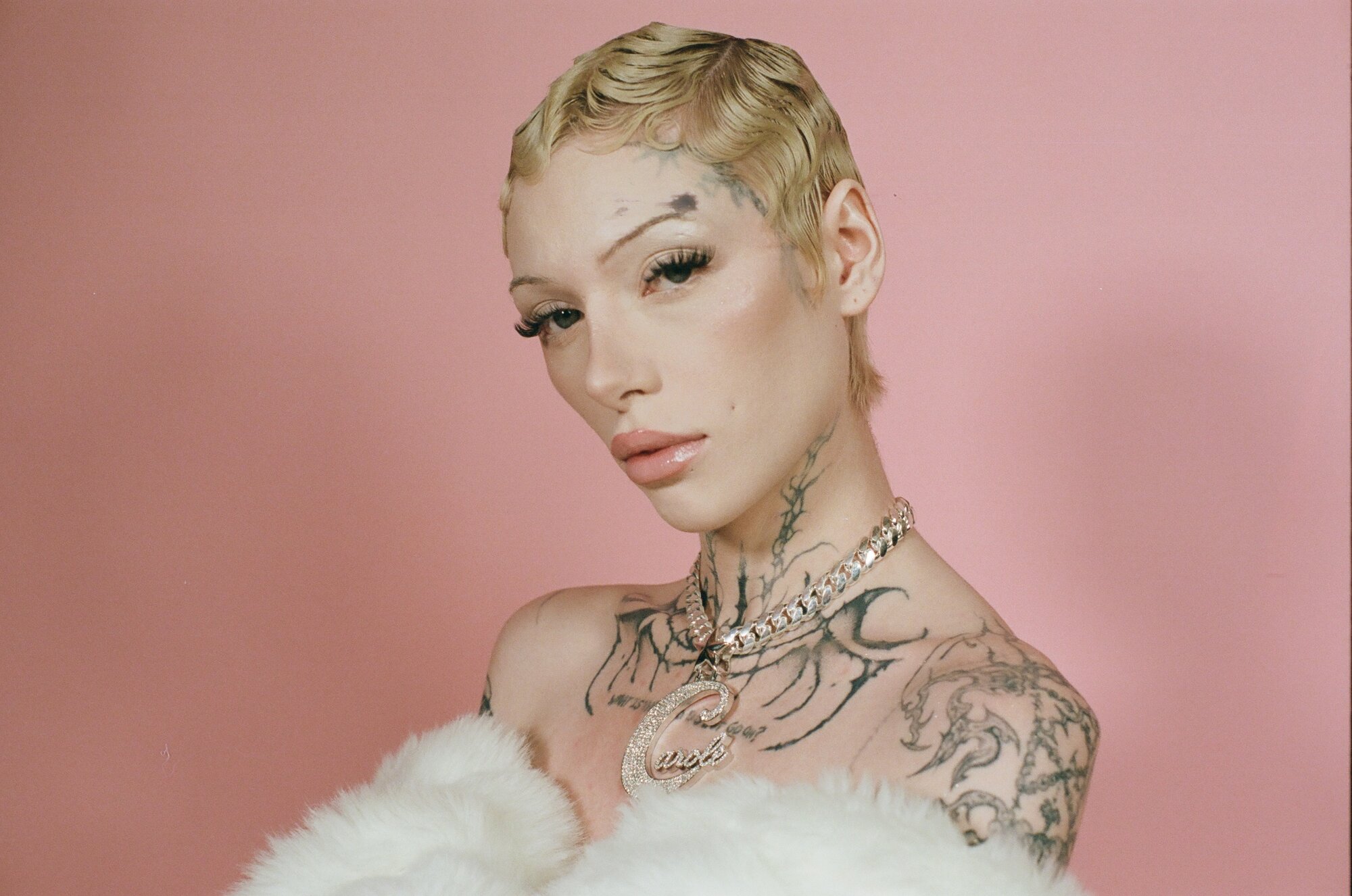
After first capturing the world’s attention with the breakout success of ‘Violent’, carolesdaughter has continued to evolve into one of alternative pop’s most compelling and emotionally honest voices. Refusing to be confined by genre, the singer-songwriter’s debut album, You Can’t Spell Sweetheart Without Thea, blends jazz influences, trip-hop atmospheres and alternative pop into a deeply personal collection of songs that explores loneliness, womanhood, resilience and the search for connection.
Described as the clearest portrait of who she is today, the album finds carolesdaughter embracing vulnerability without losing the sharp wit and self-awareness that have become hallmarks of her songwriting. Across thirteen tracks, she examines everything from self-preservation and identity to the complexities of growing up, ultimately creating a record that feels both deeply introspective and universally relatable.
I caught up with carolesdaughter to chat about creating her most personal work to date, finding comfort through music, growing up in the spotlight and why You Can’t Spell Sweetheart Without Thea feels like the most authentic representation of who she is as an artist. Read the Q&A below.
For anyone discovering carolesdaughter for the first time here, how would you describe yourself as an artist and what you’re all about?
“I’m not really sure, I really hate putting myself in a box. I don’t really think you can tell people who you are, you just have to show them. One thing I will say is I feel like I’m everything but always the same inside/at the core.”
You’ve said that your upcoming new album You Can’t Spell Sweetheart Without Thea feels like the clearest portrait of who you are today. What makes this record different from everything you’ve released before?
“I really took my time with his record, and I think you can’t rush great things. I’m confident in saying that I think it is my best and greatest work since I started my career. It’s different because it’s original and imperfectly perfect in a very saturated and curated world.”
Your songs balance vulnerability with a really sharp sense of humour and self-awareness. Do those two sides of your personality naturally go hand in hand?
“Of course. I respect all kinds of artists, but for me-there isn’t a character for carolesdaughter. That’s kind of the whole point of my name in the sense that it references me in relation to my mother, making it clear I’m a real person with background and history. My identity as an artist is pretty much exactly who I am as a person, and it changes and grows with me.”
You found success at such a young age with ‘Violent’. Looking back now, how do you think you’ve grown both as an artist and as a person since then?
“I’m grateful that I had such a spontaneous drop into the music industry. I have only ever been blessed with opportunities and safety because of it, and has also given me the opportunity to create more art. I’m just extremely blessed and grateful. I’ve grown up from 17 to 23 as we all do. I’ve become more and more myself and am now creating with much more intention.”
‘The Invisible Man’ explores loneliness in a really thoughtful way. What inspired you to write about that feeling from the perspective you did?
“Yes, I tried to express myself in a way where there is a loneliness that is much deeper than being alone or single or something superficial like that. Feeling completely disconnected from others and chronically unfulfilled is something I struggle with, and sometimes life feels like a never-ending cycle of predictable events and performances.”
Growing up as the youngest of ten siblings is quite a unique experience. Has your family shaped the way you write songs or see the world?
“Of course. I was also raised extremely religious, and it affected my family and me in so many ways I couldn’t begin to list them, but ultimately it led to me having many very beautiful friendships.”
Finally, what do you hope listeners take away from You Can’t Spell Sweetheart Without Thea once they’ve spent some time with it?
“I hope it is something that comforts them that they can come back to whenever they need. Music is my comfort.”